Perhaps our contemporary attention age with its two-edged ‘sword’ of AI is yet another ‘messy middle’ that poses a riddle:…
-
Featured Post
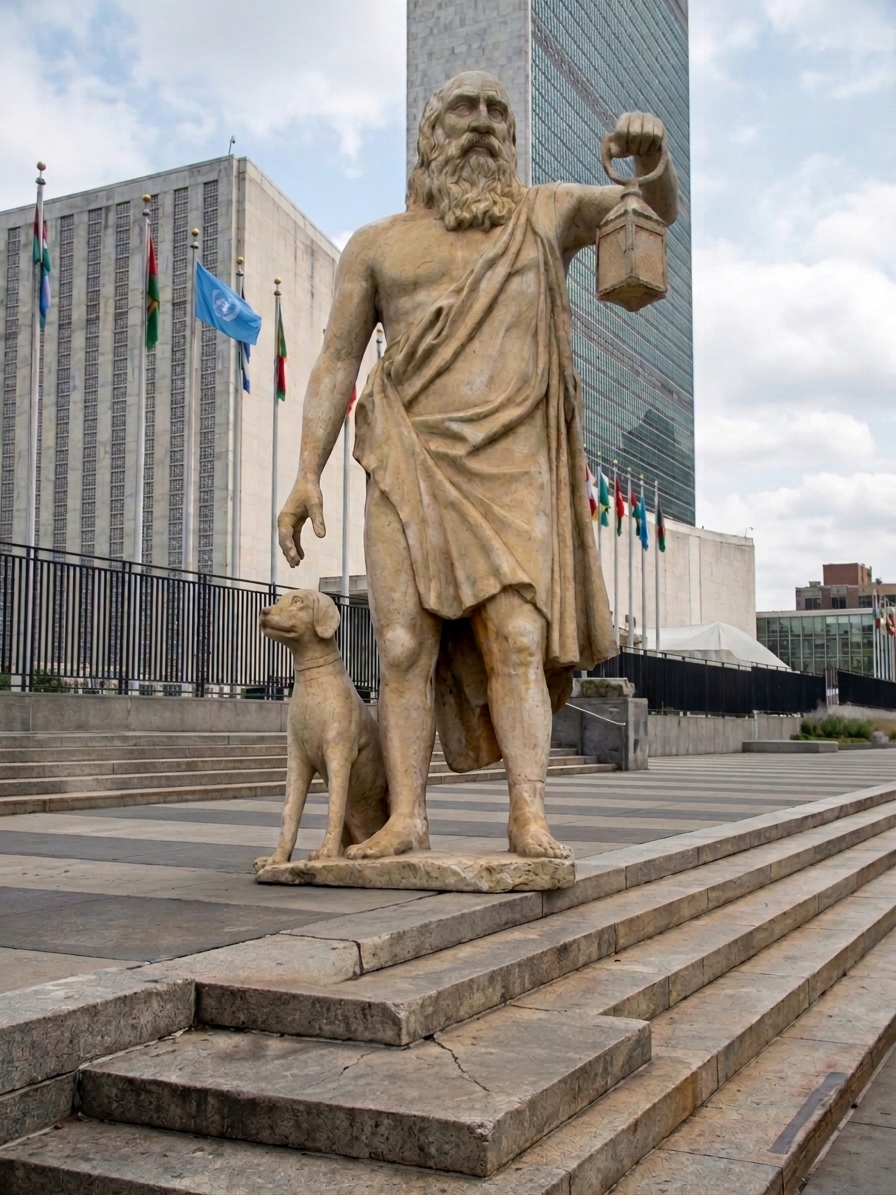
Barefoot sage on steps of the UN addresses wishful agency – holds up lantern, not smartphone
Summary press release A modern-day Diogenes on the UN steps used a lantern to challenge AI CEOs, asserting that commodified data yields no authentic man. Like Midas or a Djinn, machines mimic humanity but strip spirit, exposing alignment failures and lost authenticity. NotClosedAI’s CEO advocated a coordinated slowdown; Diogenes called it liability protection masking runaway…
Posts List
-
I’ve been recommending Chromebooks since 2013 — for those who mostly live on the Web (Webmail, browsing) and are comfortable with Google’s ecosystem (Gmail, etc.). Well, PC World noted that the holiday season was big for Chromebook sales on Amazon — Amazon’s three top-selling computers for the holidays were… Chromebooks Amazon said Friday the top three computers it sold between Nov. 1 and Dec. 25 were all Chromebooks, a first…
-
Whether you received a new computer as a holiday gift or not, there are some standard things to do after you’ve enjoyed the out-of-the-box experience and configured some initial settings. PC World / MacWorld has some useful summaries. More below. “7 critical things to do immediately with a new PC” discusses getting Windows Updates (yeah, new doesn’t mean all’s up-to-date), installing an alternate Web browser, deciding whether malware proaction is…
-
Yes, it’s that time of year again. Fake shipping notifications — email messages purporting to be from mainstream shippers (FedEx, UPS, etc.) saying that delivery of a parcel / package was attempted — directing you to open an attachment or click on a link. As pointed out in last year’s post “Holiday Cyber Risks” (December 15, 2013), spoofed emails are all too common this time of year. The latest scam…
-
Fake gift card surveys. I’ve seen more of these scams the last month or two. The email messages claimed to be from Amazon with “Amazon Coupons” as the subject. Examination of the messages revealed sender addresses having nothing to do with Amazon. Like from amazon@someothersite.com. Encoded (indecipherable) links in the bodies of the messages went to strange sites. Message bodies contained gibberish. These survey scams appear on social media sites…
-
Fake order confirmations. I’ve seen a lot of these the last couple of weeks. Particularly repeated email messages claiming to be from Costco (Walgreens, etc.) with “Order Confirmation” as the subject. Of course, I never placed any such order(s). Examination of the messages (without actually opening them in an email app) revealed various sender addresses having nothing to do with Costco. Links in the bodies of the messages went to…