Category: News

News, annoucements

  • Apple’s M-Series security – promises ≠ perfection

    “GoFetch” is in the tech news cycle this week.

    Hopefully you know whether you have an Apple M-Series Mac. The M-Series (aka Apple silicon) computers advanced better performance and energy efficiency. How about security? – faster data pipelining is tricky (via so-called optimizations). Obscurity’s no guarantee (like, really, the front door key’s not in a nearby flower pot, eh).

    This article (below) provides an overview of the situation (and references for more technical detail). The author uses a car safety analogy to frame advice for the latest security vulnerability. No need to panic (and there’s no recall, like for a car).

    Hopefully most people understand what encryption is – how it keeps our data and communications safe. Like spy-versus-spy stuff, eh.

    • PC World > “Apple’s unfixable CPU exploit: 3 practical security takeaways” by Alaina Yee (Mar 22, 2024) – After Intel’s and AMD’s past vulnerabilities, Apple’s vulnerability demonstrates that security is a dynamic goal.

    As reported by Ars Technica, this security flaw allowed academic researchers to pull end-to-end encryption keys from Apple’s processors, using an app with normal third-party software permissions in macOS. Called GoFetch, the attack they created works through what’s called a side-channel vulnerability – using sensitive information discovered through watching standard behavior. It’s a bit akin to observing armored-car guards carry bags out of a business, and valuing the contents based on how heavy they seem (e.g., gold vs. paper cash).

    … you should create a multilayered approach to protecting yourself, … Think of it like a car – we know that a car crashes happen, with deadly results. Over time, we’ve mandated seatbelts, upgraded materials to have better force absorption, standardized airbags, switched to anti-lock brakes, devised proximity detectors and audio warnings, and more, all to improve safety.
  • Big Tech’s rocking credos on the rocks – a love story

    Some billionaires are bullies. But can they be bullied? Sure, in autocracies. But in the United States? Well … disrupting the so-called disrupters. As the song goes, “traveling twice the speed of sound, it’s easy to get burned” [1].

    Normally, sucking up to power isn’t news in the corporate world, but Silicon Valley was supposed to be different. – Kara Swisher

    Kara Swisher‘s been on a whirlwind book tour for a week promoting her new book, “Burn Book: A Tech Love Story.” And her tale’s a tall one, an important one, on Big Tech. Something which I followed as well over the decades in magazines, tech columns by Walt Mossberg, online articles, AllThingsD, Recode, books about Silicon Valley, etc. And experientially with all the gadgets.

    The setup for her opinion essay (an excerpt from her book) in the Washinton Post arrived in my email on February 18: “The Week in Ideas: The day Silicon Valley rode Trump’s escalator to nowhere” by Michael Larabee. He opened with a question, the big question:

    Is Big Tech about inventing the future? Changing the world? ‘Disrupting’ entrenched systems that benefit the few to improve life for the many? Or is it about making money?

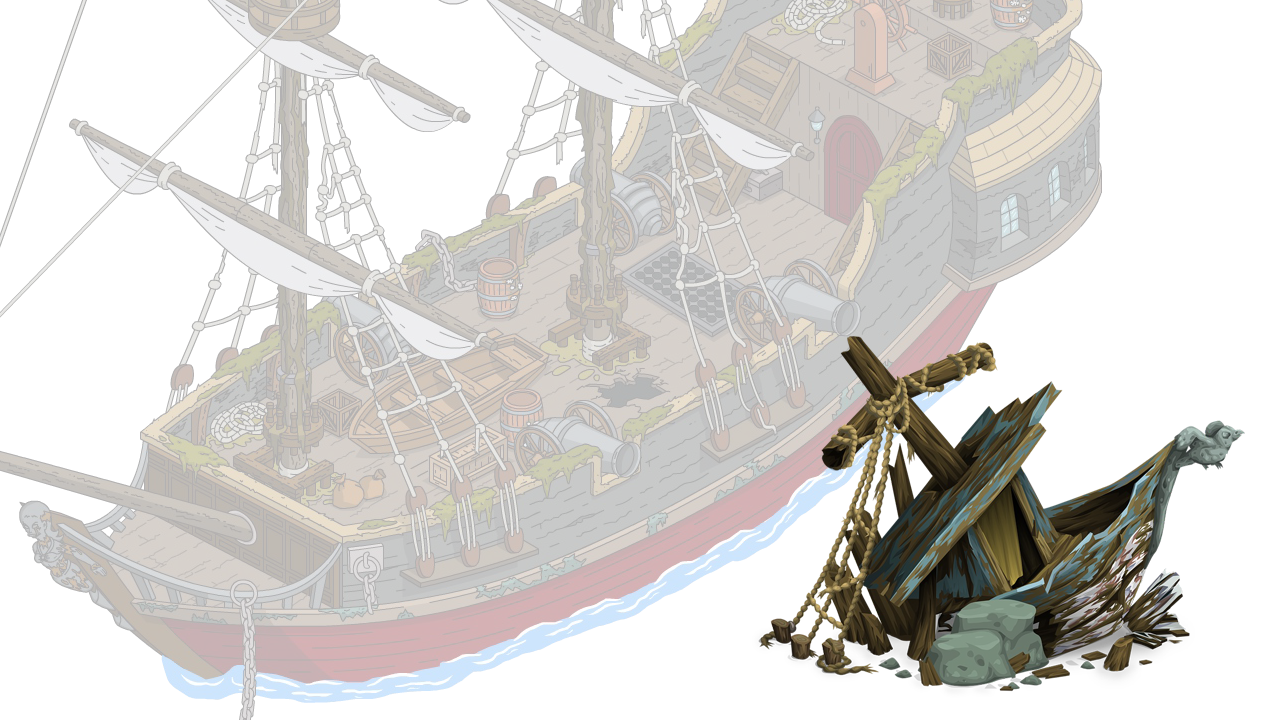
    … Swisher shares a deeply illuminating quote from French philosopher Paul Virilio that she said she thinks about a lot: “When you invent the ship, you also invent the shipwreck.” I’m thinking about that a lot now, too.

    • Washington Post > Opinion > “How Trump pushed Silicon Valley off the rails” by Kara Swisher (February 15, 2024) – Tech’s pop culture visions: Star Wars and Star Trek.

    … casual hypocrisy became increasingly common over the decades that I covered Silicon Valley’s elite. Over that time, I watched founders transform from young, idealistic strivers in a scrappy upstart industry into leaders of some of America’s largest and most influential businesses. And while there were exceptions, the richer and more powerful people grew, the more compromised they became — wrapping themselves in expensive cashmere batting until the genuine person fell deep inside a cocoon of comfort and privilege where no unpleasantness intruded.

    The [2016] Trump tech summit was a major turning point for me and how I viewed the industry I’d been covering since the early 1990s. The lack of humanity was overwhelming.

    I love tech, I breathe tech. And I believe in tech. But for tech to fulfill its promise, founders and executives who ran their creations needed to put more safety tools in place. They needed to anticipate consequences more. Or at all. They needed to acknowledge that online rage might extend into the real world in increasingly scary ways.

    Notes

    [1] “Just a Song Before I Go” by Crosby, Stills & Nash (1977).

  • AI chatbot subscriptions – worth $20 a month?

    Despite all the reality checks and cautions about AI chatbots, general discussion & development continues to move ahead, discounting worst-case scenarios. Particularly big tech rollouts of new versions – with some new names – for public-facing chatbots.

    And AI startups even pitching the promise of empathetic-like AI customer-facing agents to businesses (delivering at least better conversations than with many outsourced customer support services, eh).

    So, new choices, as this Wired article reminded me, for AI chatbot subscriptions – versus the lesser but free versions. What do you get for $20 a month, eh? Better stochastic parrots? Less hallucination?

    And what about all that private data being collected in interactions?

    The stock market continues to bet heavily on AI profitability.

    • Wired > “ChatGPT vs. Gemini: Which AI Chatbot Subscription Is Right for You?” by Reece Rogers (Feb 15, 2024) – While everyone wants your $20 per month for access to their best AI chatbot, is the free option okay for most people?

    Key takeaways

    • Most people are fine with the free option.
    • Don’t immediately trust the output.
    • Yes, there are privacy trade-offs (check the opt-in / out default settings, eh).
    • English is prioritized for interactions in most cases.
    • The underlying technology is likely to be foundational to the next wave of web browsers, search engines, and operating systems.

    Google is the latest company to offer one of its best AI chatbots as a subscription product. In early February, the company began offering access to Gemini Advanced for $20 a month. In doing so, Google was following the precedent set by OpenAI, which sells access to its GPT-4-powered chatbot for $20 a month. Additionally, Microsoft sells subscriptions to its top tool, Copilot Pro (which is also powered by ChatGPT-4), for the same price. But, do you really need to factor another pricey subscription into your budget?

    The article provides an overview of what’s included and the outputs, as for office applications: summarizing transcripts of meetings and interviews, crafting email correspondence, captioning photos, composing invitations, assisting short-form creative writing.

    • Gemini Advanced from Google
    • ChatGPT Plus from OpenAI
    • Copilot Pro from Microsoft
  • ChatGPT at one year – we cut our path in moving on

    ChatGPT at one year – we cut our path in moving on

    Our future will be characterized by a tension between copilot (AI as collaborator) and autopilot (humans as sidekick to AI). The latter is more efficient and cheaper in a narrow labor economics sense but troublesome in all sorts of ways.” – Wired > email Newsletter > Steven Levy > Plaintext > The Plain View (December 8, 2023)


    Ready or not, in November, 2022, a new chatbot “tumbled into civilization’s ongoing conversation.” The legacy of Eliza … neural nets and deep learning … captivating us like a beguiling Jedi mind trick – “You will use this tool!”

    There’ll be books, movies, dramas … the rise of ChatGPT.

    Has it been a year – and only a year – since ChatGPT kicked the hornet’s nest? In this article (below), Steven Levy looks back at (and beyond) all the fuss, promise, and portent of “the fastest-growing user base in history.” In a year where there was enough international contention, conflict, & chaos, “OpenAI turned up the heat.”

    In helping a friend recently move from an old flip phone to a smartphone, once again I was struck by the power of an agile, mobile user interface. A game changer. Seductive. Easy access matters.

    Merriam-Webster’s “Word of the Year 2023” is “authentic.” What will authenticity look like going forward? (Levy concludes in his “Ask Me One Thing” section, that “privacy is indeed a fight that we’ve lost.”)

    As I wrote (years ago) in my poem “MORE LESSONS … (from gerbil poems)” …

    what is there to reply, to say?
    pay the beast, we cannot stay.
    we have left the trees, put up walls.
    gone the warming fire-ring without,
    the tribal whole within.
    ascending lord of neoteny,
    at home, we yet stand that grassy plain
    and cut our path in moving on

    • Wired > “The Year of ChatGPT and Living Generatively” by Steven Levy (Dec 1, 2023) – In November last year, OpenAI launched a “low key research preview” called ChatGPT. What happened next transformed the tech industry – and perhaps humanity’s future.

    Some key points

    The response shocked ChatGPT’s creators at the AI startup OpenAI as much as anyone. When I was interviewing people at the company for WIRED’s October cover feature this year, virtually everyone admitted to wildly underestimating the chatbot’s impact.

    In my first Plaintext column of 2023, I made the observation (too obvious to be a prediction) that ChatGPT would own the new year. I said that it would kick off a wet, hot AI summer, dispelling whatever chill lingered from an extended AI winter.

    ChatGPT had scrambled tech’s balance of power [triggered an AI arms race].

    Maybe most significantly, ChapGPT was a shrieking wake-up call that a technology with impact at least on the scale of the internet was about to change our lives.

    Meanwhile, during this year of ChatGPT, many AI scientists themselves have come to believe that their brilliant creations could bring about disaster.

    I appreciate ChatGPT for many things, but especially the clarity it provided us in an era of change. In the Before Days, meaning anytime prior to November 30, 2022, we already had long passed the turning point in digital technology’s remodeling of civilization.

  • Humanity’s final challenge – AI profit?

    Humanity’s final challenge – AI profit?

    Hello Dave

    Much in the news cycle. Much buzz. I’ll expect books and a movie script for something even more epic that The Social Connection.

    OpenAI’s “bizarre org chart.” Mission creep or mission miscommunication? Was a wizard workers mass exit a real scenario? The twists and turns …

    Is “the problem posed by superintelligence” really “humanity’s final challenge?” (Like in The Foundation or Dune novels?)

    • Wired > email Newsletter > Steven Levy > Plaintext > The Plain View > “OpenAI’s boardroom drama could mess up your future” (November 22, 2023) – Reflecting on a conversation with chief scientist Ilya Sutskever at OpenAI’s headquarters.

    OpenAI began as a nonprofit research lab whose mission was to develop artificial intelligence on par or beyond human level—termed artificial general intelligence or AGI—in a safe way. The company discovered a promising path in large language models that generate strikingly fluid text, but developing and implementing those models required huge amounts of computing infrastructure and mountains of cash. This led OpenAI to create a commercial entity to draw outside investors, and it netted a major partner: Microsoft. Virtually everyone in the company worked for this new for-profit arm. But limits were placed on the company’s commercial life. The profit delivered to investors was to be capped—for the first backers at 100 times what they put in—after which OpenAI would revert to a pure nonprofit. The whole shebang was governed by the original nonprofit’s board, which answered only to the goals of the original mission and maybe God.